

It happens every year. The first properly warm morning of spring arrives, you reach for the air con button, and instead of cool air you get a lukewarm blast that does very little except to notify you that something is wrong.
Car air con not working is one of the most common issues independent garages deal with as temperatures start to climb. The good news is that the majority of faults are not serious, and most drivers are back on the road with a fully working system far sooner than they expected.
This guide explains what is most likely causing the problem, what you can safely check yourself before calling a garage, and what a proper diagnostic will involve. Whether you drive a VW, an Audi or any other make, the same principles apply. Understanding the basics can save you time and money.
How Your Car’s Air Con Actually Works
Your air con system works by circulating a gas called refrigerant around a closed loop of components. The compressor pressurises the gas, the condenser cools it down, and the evaporator allows it to expand again, which is what actually draws heat out of the air inside the cabin. A blower fan then pushes the cooled air through your vents.
The key thing to understand is that the whole system is sealed and depends on the refrigerant being at the right pressure. If the level drops too low, the system either stops working or shuts itself down to prevent damage.
On VW and Audi models, particularly newer ones built on the MQB platform, the system relies on pressure sensor readings to decide whether to run at all. If that sensor gives a poor reading, the air con can cut out even when there is nothing fundamentally wrong with the system. This is why a proper vehicle safety check with diagnostic equipment is often the quickest way to get to the bottom of the problem.
The Most Common Reasons Car Air Con Stops Working
Low Refrigerant
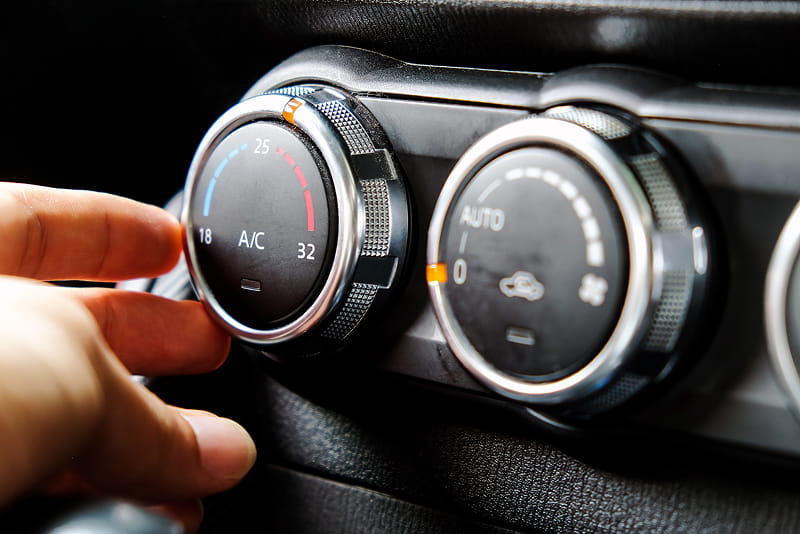
This is the most common cause by a considerable margin. Air con systems are not completely airtight and lose roughly 10 to 15 percent of their refrigerant every year through normal seepage around seals and connections. That loss is gradual, so most drivers only notice a problem once the system has dropped well below optimal pressure.
If your car is more than three or four years old and has never had an air con service, there is a strong chance the refrigerant level is the issue. A regas will often fix it, but a leak test should always come first.
A Refrigerant Leak
A leak is different from gradual seepage. It means refrigerant is escaping faster than it should, usually from a damaged seal, a corroded pipe or a component that has cracked over time.
Topping up the refrigerant without first finding and repairing the leak is a waste of money. The new gas will simply escape again in the same way. A reputable garage will use UV dye testing or nitrogen pressure testing to locate the source before doing anything else.
A common real-world example is the B8 generation Audi A4 and A6, both of which are known for condenser corrosion caused by stone chip damage at the front of the car. The condenser sits just behind the front bumper, and over time even small chips create weak spots that eventually let refrigerant escape. If you drive one of these models and your Audi air conditioning has gradually got less effective over a season or two, a corroded condenser is worth checking early.
A Faulty Compressor
The compressor is the most expensive component in the system. It is driven by the engine via a belt and clutch, and you will sometimes hear it engage when you switch the air con on, a brief click or slight change in engine note.
Signs that the compressor may be at fault include a loud rattling or knocking noise when the air con is switched on, or a system that cools briefly and then cuts out. In some cases the compressor clutch fails rather than the compressor itself, which is a cheaper fix.
The most important thing to know is that running your system when it is low on refrigerant for an extended period puts enormous strain on the compressor. What starts as a straightforward regas can turn into a much more expensive repair if the damage has already been done. Getting it checked early at a trusted car servicing garage makes a real difference to the final bill.
Electrical Faults and Pressure Sensor Failures
Modern cars are heavily reliant on sensors to manage systems like air conditioning. If the pressure sensor sends the wrong reading, the car’s electronics will shut the air con down as a precaution, even if the refrigerant level is perfectly fine.
This is a particularly common fault on VW Golf Mk7 and Mk8 models, the Audi A3 8V and 8Y generations, and other MQB Evo platform vehicles. The sensor itself is often inexpensive to replace, but finding the fault in the first place requires proper diagnostic software, not a generic fault code reader from a parts shop.
This kind of fault is exactly why it is worth using a specialist for VW and Audi repairs rather than a general fast-fit chain that may not have the right equipment or experience.
A Blocked Cabin Filter
This one catches a lot of drivers out. The cabin filter (sometimes called the pollen filter) sits behind the glovebox and cleans the air before it enters the cabin. When it becomes blocked, it restricts airflow so severely that even a fully working air con system struggles to make a noticeable difference.
Many drivers assume their air con has failed when all they actually need is a new cabin filter. Filters should be changed every 12 to 15 months or 12,000 miles, whichever comes first. They are often skipped at budget services, which means cars that have been serviced cheaply elsewhere can be running on a filter that is two or three years old.
A Blocked Evaporator Drain
If your air con seems to work but you have noticed a musty smell, damp carpets in the front footwells, or a wet patch under the passenger seat, the evaporator drain is probably blocked.
The evaporator produces condensation as it works, which normally drains harmlessly away underneath the car. If the drain tube becomes clogged, that water has nowhere to go and ends up inside the cabin. Left too long, it can damage carpets, underlay and the electrical components beneath the seats. This is a straightforward fix when caught early, but an expensive one if it is left until the interior starts to deteriorate.
What You Can Check Yourself Before Calling a Garage
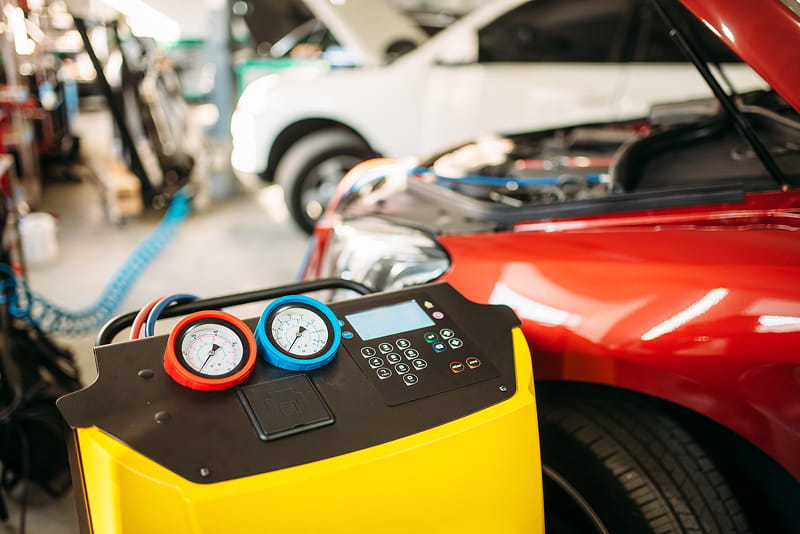
There are a few simple things you can look at before picking up the phone.
- Check the cabin filter. Many are accessible without any tools by opening the glovebox and unclipping a cover. If it is visibly grey and clogged, it needs replacing regardless of any other fault.
- Make sure the air con is actually switched on and that the temperature dial is turned down. This sounds obvious but it catches more people than you might expect.
- Listen carefully when you switch the air con on. A clicking, rattling or grinding noise when the compressor engages suggests a mechanical fault worth investigating promptly.
- Check the front of the car for any visible damage to the grille or bumper area. The condenser sits just behind this area and can be damaged by stone chips or minor impacts.
What you should not do is attempt to top up the refrigerant yourself using a DIY kit. These kits, widely sold at motor factors and online, are difficult to use accurately, often overfill the system, and can introduce moisture that causes corrosion and long-term damage. If there is an underlying leak, a DIY top-up will simply delay the problem and make it worse.
Regas vs Full Air Con Service: What Is the Difference?
These terms are often used interchangeably, but they describe two different things.
A regas is simply a matter of removing old refrigerant and replacing it with a fresh charge to manufacturer specification. It is a maintenance service, not a repair, and will only fix the problem if low refrigerant is the sole cause.
A full air con service includes a leak test using UV dye or nitrogen pressure, a vacuum of the system to remove moisture, and then a regas. It also involves a check of the main components including the compressor, condenser and cabin filter.
One other thing worth knowing is the difference between refrigerant types. Cars built before around 2017 typically use R134a gas, which is relatively inexpensive and costs between £50 and £80 for a regas at most independent garages.
Cars built after 2017 use a newer refrigerant called R1234yf, which is required under EU F-Gas regulations. This gas costs around five times more than the older type, so a regas for a newer car typically comes in between £150 and £250.
Main dealer prices for the same service are often significantly higher, which is one reason many Essex drivers choose a specialist independent for car repairs instead.
Why Leaving It Too Long Costs More
Air con problems rarely fix themselves. The longer a fault is left unaddressed, the more expensive the eventual repair tends to be.
Running a system that is low on refrigerant puts stress on the compressor. A compressor replacement can run to several hundred pounds depending on the car. Compare that to the cost of a routine service and the choice is straightforward.
A damp evaporator will grow bacteria and mould over time, producing that distinctive musty smell. An antibacterial air con clean is a quick, inexpensive treatment, but only if it is done before the problem has been building for years.
With the warm summers Essex has been experiencing recently, the air con system is under more demand than ever. A system that might scrape through a mild spring can struggle badly by the time July arrives. Getting a vehicle check done in spring, before the heat sets in, is always the smarter approach.
Book Your Air Con Check at Clover Autos
At Clover Autos, we use specialist air con service equipment to recover, recycle and recharge refrigerant to the exact specification for your vehicle. Every job starts with a proper leak test before any gas is put back in, so you can be confident the fix will last.
For VW and Audi drivers in Essex, we have the diagnostic software and the experience to identify pressure sensor faults and electrical issues that a general garage might miss. Our VW servicing and Audi servicing teams understand these systems inside out, and we will always give you a clear, honest explanation of what we have found before any work begins.
You will never receive a vague estimate or an unnecessary repair. Just straightforward advice, fair pricing, and a car that works as it should. You can read what our customers have to say on our testimonials page or get in touch to book your air con check today.
Frequently Asked Questions
How much does an air con regas cost in the UK?
It depends on the refrigerant type your car uses. Older vehicles using R134a gas typically cost between £50 and £80 at an independent garage. Newer cars using R1234yf gas cost more, usually between £150 and £250, because the gas itself is significantly more expensive. Always make sure the price includes a leak test.
Why is my air con blowing warm air even though it was working last year?
Refrigerant loss is gradual. Systems lose around 10 to 15 percent of their gas every year through normal seepage, so the effect builds slowly over time. By the time you notice the air is not as cold as it was, the system may be operating at well below optimal pressure. A regas often resolves it, but the system should be leak tested first.
Can I use a DIY regas kit?
We would not recommend it. DIY kits are difficult to use accurately and can overfill the system, which damages the compressor. They can also introduce moisture that causes internal corrosion. If there is a leak, the top-up will simply escape again. A proper service from a trained technician is the safer and more cost-effective route.
How often should I get my air con serviced?
Every two years is the standard recommendation, and annually if you use the car heavily or live somewhere that gets warm summers. The important thing is not to wait until it stops working entirely, since by that point the cost of repair is often higher than it would have been.
Why does my car smell musty when I turn the air con on?
That smell is almost always caused by bacteria or mould growing on the evaporator, the component that cools the air before it enters the cabin. It is more likely to develop if the system is not used regularly or if there is a blocked drain causing moisture to sit inside the system. An antibacterial air con clean will remove it, and the treatment only takes around 30 minutes.