
The Warning Sign Most Drivers Miss
A faint squeal when slowing down. Nothing dramatic, nothing that stops the car from working. So you carry on, assume it will sort itself out, and give it a few more weeks.
A few weeks later, you’re looking at a bill that’s twice the size it would have been. The pads have worn through to the metal, and now the discs need replacing too.
It’s the most common brake story we hear. And it’s almost always avoidable.
Most drivers only think about their brakes when something feels obviously wrong, or when an MOT is coming up. The problem is that brake wear is gradual. The car still stops. It just stops less well than it should, and the cost of fixing it grows quietly in the background.
This guide covers the signs to watch for, what’s actually happening inside your braking system, what brake pad replacement costs in the UK in 2025, and what the job involves from start to finish. Whether you drive a VW, an Audi, or anything else on the road, the same principles apply.
Why Brakes Deserve More Attention Than They Usually Get
Brakes don’t get much thought until something goes wrong. But the numbers tell a different story.
According to DVSA data for Q3 2024/25, brakes accounted for over 21% of all defects recorded across MOT tests, making them the second most common defect category in the UK. Department for Transport figures show that defective brakes were linked to 3,894 road accidents between 2013 and 2018, contributing to 64 fatalities over that period.
Those aren’t numbers about catastrophic brake failure. Many of those vehicles still had working brakes. Just not good enough ones.
The other reason brakes matter more than most people realise is the cascade effect. Pads are the first component to wear. If you leave them too long, they score the disc. Once the disc is scored or worn, a straightforward pad replacement becomes a much bigger job involving new discs too. Leave it even longer, and callipers can be damaged. Each stage costs more than the last.
Catching it at the pads stage is always the cheapest and simplest option.
How Your Brakes Actually Work
You don’t need to know the engineering in detail, but a basic picture helps everything else make more sense.
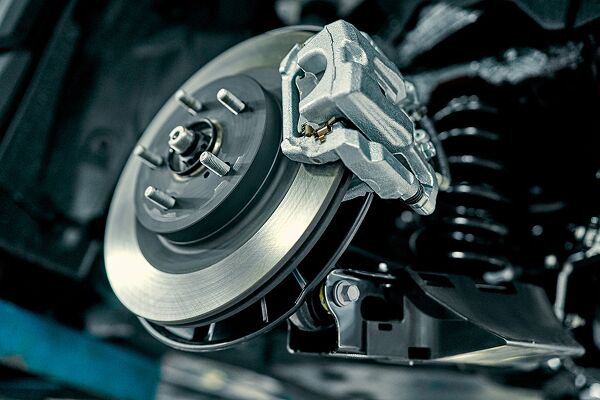
When you press the brake pedal, hydraulic fluid sends pressure to the brake callipers at each wheel. The calliper squeezes the brake pads against a metal disc (the rotor) that spins with the wheel. That contact creates friction, which slows the wheel down. The friction also generates heat, which the disc is designed to absorb and disperse.
Pads are the sacrificial part of this system. They’re designed to wear down so the disc doesn’t have to. Over time, the friction material on the pad gets thinner. Once it drops to 3mm or below, the pad needs replacing. Most mechanics will flag it at 4mm as an early warning.
Front pads wear faster than rear pads. This is because most of the braking force goes through the front wheels. When you brake, the car’s weight shifts forward, loading the front axle. Front pads typically handle around 60 to 70% of the stopping work, which is why they’re usually the first to need attention.
How long pads last depends heavily on how and where you drive. Motorway drivers in Essex can get 50,000 to 65,000 miles from a set. Someone doing stop-start commuting through Harlow or Epping every day might see 25,000 miles or less from the same pads.
What About the Discs?
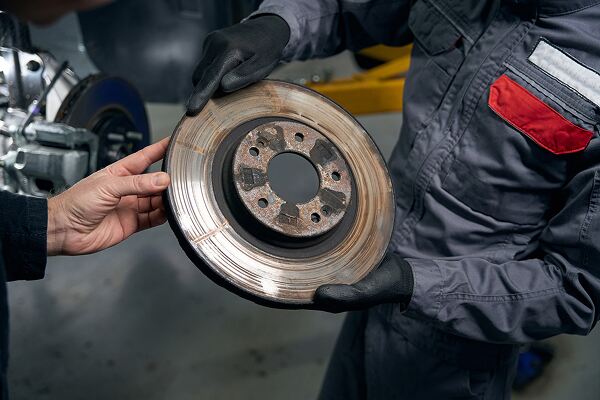
Discs are built to last longer than pads, typically 30,000 to 70,000 miles. But they still wear, and they can warp or develop surface corrosion, particularly on cars that don’t get used hard enough to keep them clean. Discs don’t always need replacing when the pads do, but they always need to be checked. A mechanic should measure disc thickness and look for scoring before deciding whether pads alone will do the job.
On many VW and Audi models, electronic wear sensors are fitted as standard. These monitor pad thickness and trigger a dashboard warning when the pads are getting low. It’s useful, but it shouldn’t be the only thing you rely on. Not every warning means immediate danger, and not every worn pad will trigger a light before causing damage.
7 Warning Signs Your Brakes Need Attention
1. A High-Pitched Squeal When You Brake
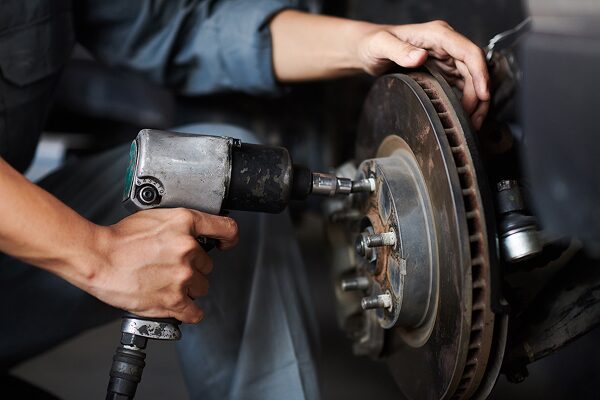
This is usually the first sign, and it’s intentional. Most brake pads have a small metal wear indicator tab built into them. When the pad material wears thin, the tab makes contact with the disc and produces a squealing sound. It’s designed to get your attention before the situation becomes urgent.
If you hear squealing consistently when braking, get the pads checked soon. You almost certainly still have time. But don’t keep putting it off.
One exception: new pads can squeal briefly during the first hundred miles or so while they bed in. That’s normal and will stop on its own.
2. A Grinding or Growling Noise
This is a different sound to squealing and a more serious one. Grinding means the pad material has gone completely, and the metal backing plate is now rubbing against the disc. Damage is happening in real time every time you brake.
At this point, pad replacement alone may not be enough. The disc will likely need replacing too, which pushes the cost up considerably. If you hear grinding, book the car in straight away rather than leaving it another few days.
3. The Car Takes Longer to Stop
If you’ve noticed you need more stopping distance than you used to, or that the brakes feel less sharp when you press them, that’s worth acting on. It can point to worn pads, degraded brake fluid, or a sticking calliper. The car still stops. It just doesn’t stop as well as it should.
This one is easy to dismiss because the change is gradual. You adjust without realising you’re doing it.
4. A Spongy or Low Brake Pedal
A healthy brake pedal has a firm, consistent feel. If yours travels further before the brakes engage, or feels soft or spongy underfoot, that’s a sign something isn’t right.
The most common causes are air in the brake lines, low brake fluid, or a fluid leak somewhere in the system. Brake fluid degrades over time by absorbing moisture, which reduces its effectiveness. It typically needs replacing every two years regardless of mileage, and it’s often checked as part of a full service.
5. Vibration Through the Pedal or Steering Wheel
If the brake pedal pulses when you press it, or you feel a juddering sensation through the steering wheel when slowing down, that usually points to warped or unevenly worn brake discs.
Heat, heavy use, and general wear can all affect how the disc surface wears. A pulsing pedal is a reliable sign that the discs need a proper inspection. It doesn’t always mean they need replacing, but it does mean they need measuring.
6. The Car Pulls to One Side When Braking
If the car drifts left or right when you press the brakes, the most likely cause is uneven pad wear or a sticking calliper on one side. It can also be a tyre or suspension issue, so a proper inspection is needed to identify what’s actually going on.
Don’t ignore this one. Pulling under braking affects your control of the vehicle, particularly in an emergency stop.
7. A Brake Warning Light on the Dashboard
On VW and Audi models especially, a brake warning light usually means the wear sensors have detected low pad thickness. On other cars, it can also indicate low brake fluid. Either way, it’s a prompt to get the car looked at rather than something to clear and forget.
Worth knowing: according to the DVSA MOT inspection manual, an illuminated brake wear indicator is not in itself a reason for MOT failure. But it is a clear sign that action is needed, and driving past the point where the light has come on risks turning a simple repair into a more expensive one.
What Brake Pad Replacement Costs in the UK in 2026
This is the question most drivers end up searching for, so here are the honest numbers.
For a mainstream car such as a VW Golf or Ford Focus, you can expect to pay between £110 and £180 per axle for pad replacement, including parts and labour. Replacing both axles brings the average to around £250 across the UK, based on September 2025 industry data.
For Audi and VW models with larger brakes or electronic wear sensors, expect to pay more. An A4, A3, or Passat might run £180 to £320 per axle depending on specification and whether sensors need replacing at the same time.
If the discs also need replacing, the average cost for pads and discs together is around £286, rising to £400 to £500 or more on larger or higher-spec vehicles.
What Affects the Final Price?
A few things move the number up or down:
- Vehicle make and model. VW and Audi parts typically cost more than those for a Ford or Vauxhall due to component spec and greater complexity.
- Which axle. Front replacements often cost slightly more because the parts are larger and the wear is heavier.
- Whether discs need replacing. This is the biggest variable. A mechanic should always measure disc thickness before recommending disc replacement.
- Pad quality. Organic pads are cheaper but wear faster. Ceramic pads are quieter and last longer but cost more upfront.
- Where you go. Franchised dealerships tend to sit at the top of the price range. Independent garages typically charge around 30% less for the same quality of work and parts.
A practical example: an Audi A3 owner in Essex is quoted over £400 at a franchised dealer for front pads and discs. At Clover Autos, the discs are measured and confirmed to be within acceptable limits. The job is completed as a pad replacement only, at roughly half the price. That’s the difference a proper inspection makes before any parts are ordered.
What Happens During a Brake Inspection and Replacement
Understanding the process makes it much easier to know what you’re paying for.
When your car comes in for a brake check or pad replacement, here’s what a thorough job involves:
- Wheels removed to access the brake components
- Pad thickness measured on all four corners
- Discs checked for thickness, scoring, warping, and surface condition
- Callipers inspected for sticking pistons and fluid leaks
- Brake fluid level and condition checked
- New pads fitted, calliper brackets cleaned and lubricated, wheels refitted and torque-checked to the correct specification
- Brake fluid topped up or bled if needed
- Road test to confirm everything is working properly
- On VW and Audi models: wear sensors replaced where required and the system reset
The whole job typically takes between 45 minutes and 90 minutes for a single axle. If discs are being replaced at the same time, or if there are complications such as corroded callipers, allow more time.
A brake check on its own is a quick job. If you’re not sure whether your brakes need attention, a vehicle safety check is a sensible first step before committing to any spend.
Don’t Wait Until Something Sounds Wrong
The straightforward truth about brakes is that the best time to check them is before you have a reason to worry.
Brake wear is quiet. It builds slowly. The car keeps stopping, just less well than it should, until the point where pad replacement alone isn’t enough and the discs are involved too. By then the job costs more, takes longer, and could have been avoided entirely.
Book a brake inspection if:
- You’ve noticed any of the seven signs above, even a mild or occasional one
- You’re approaching 30,000 miles since your last brake service
- You’re buying a used car and want to know what condition the brakes are actually in
- You have a long journey coming up and want peace of mind before you set off
- Your VW or Audi dashboard is showing a brake warning
At Clover Autos, we carry out brake checks and brake pad replacements for all makes and models from our workshop in North Weald, Essex. As VW and Audi specialists, we’re familiar with the specific brake setups and sensor systems on those vehicles. We’ll measure before we recommend, and we won’t suggest work that isn’t needed.
To book a brake check or discuss what your car needs, get in touch with us and we’ll get you booked in.